

Augmented Alpine A526
Alpine's Canadian Grand Prix updates...

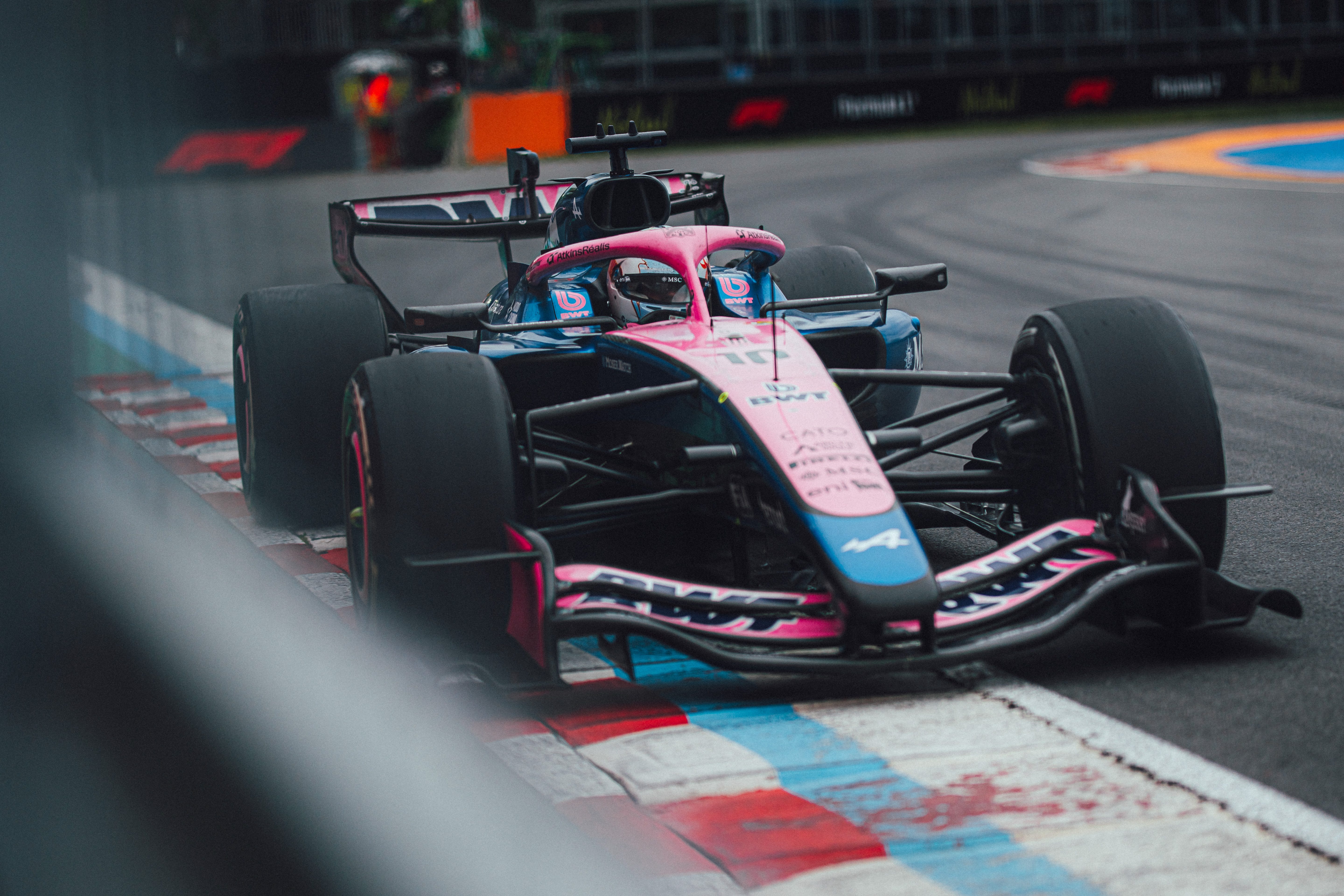
Alpine continue to make improvements on a race-by-race basis, as the team introduced another rear wing and floor update for the A526 in Canada.
This follows the larger update package that arrived in Miami, which I covered last time out.

And, for a change, let’s go from back-to-front on this analysis, focusing on the alterations to the A526’s diffuser to kick things off.
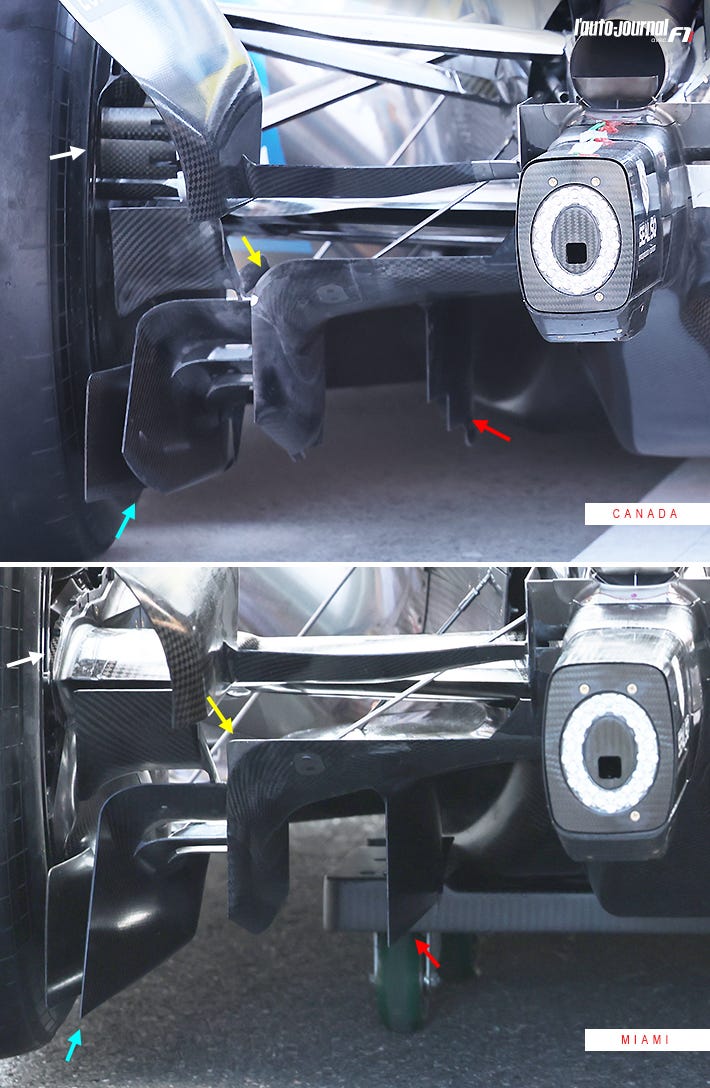
The alterations that have been made aren’t about completely reinventing the wheel, I might add, rather they’re about optimizing the airflow’s behaviour inline with the general structures that are already in place.
The comparison, above, from Nicolas Carpentiers (give Nicolas a follow on Twitter if you don’t already, as he always provides high quality insight) highlights the four main changes to the diffuser, floor winglet and brake duct fences.

Firstly, the radius of the diffuser has been trimmed, removing the Gurney-like extension that had previously lay on the corner of the assembly (yellow arrow).
Not marked on the image but the end fence of the diffuser below also appears to have been altered, which can be seen in how it has been cut and shut into the surface.
This not only alters the curved ceiling section in this region, there’s also a change in the thickness of the fence, which pinches at its lowermost extremeties, with that geometry likely having a significant impact on the vortex structure rolling off the lower edge.
Tied into this change is a change to the floor winglet (blue arrow), which now has a curved corner profile, rather than the sharp point used in Miami.
The inner fence has also been altered (red arrow), with the team applying the serrated or stepped cutouts we’ve seen from some of their rivals already this season.
Lastly, the team also instated the small rear brake duct winglets that sit above the floor winglet (white arrow), which each have their own slot on the outer edge, to help maintain performance across the required operating envelope.
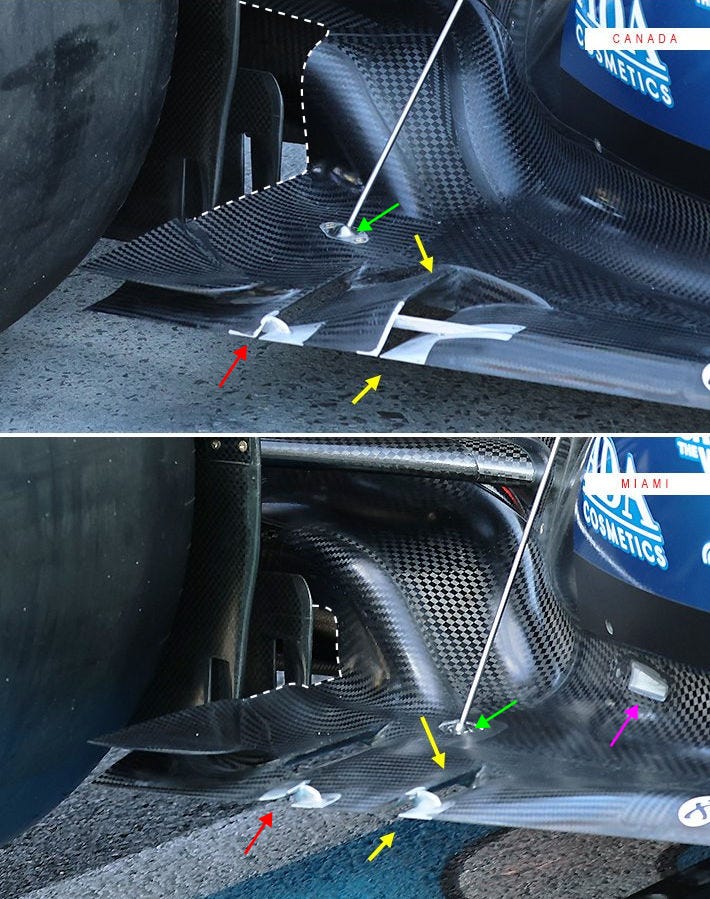
Moving forward we have a number of changes to the floor ahead of the rear tyre and the sidewall of the diffuser.
Adding some more arrows to Nicolas’ original comparison image, we’ll start with the purple arrow, which is pointed to the aperture for the IR camera and looks at the rear tyre.
This appears to have been relocated amongst the other changes that have been made.
We will get to the alterations to the deck section ahead of the rear tyre in a moment but it’s also worth noting that the metal support spar has been moved, suggesting they needed to reconsider the loads being imparted on the floor.
You’ll note that the lower of the two yellow arrows that Nicolas added to the images point to the main section of the floor before the first cutout.
This highlights the shape change that’s been made to this surface, with a less gradual slope created here in order to alter how the airflow is shaped before reaching the cutouts.

The upper of the two yellow arrows points to the now reshaped and raised slot gap, that’s not only flanked on the interior by a vertical vane, it also has an elongated metal support that also twins as a strake.
The second cutout is now creates more of a uniform slot across the span, rather than having the forward reaching component near the metal bracket on the floor’s edge (red arrow).
Then, you’ll also note the dog-eared winglet sat atop the rear deck has also been adjusted, with a steeper gradient applied at the rear.
Meanwhile, in conjunction with a much taller mouse hole in the side of the diffuser, which now arches over the top of the diffuser’s roof, much like many of their rivals, they’ve also modified the trailing edge shape of the floor ahead of the rear tyre (white dotted line).
Of course, all of these changes are contingent of the aforementioned alterations to the diffuser, with everything working hand-in-hand to extract the maximum performance from the floor and diffuser, whilst mitigating any issues caused by tyre squirt off the rear tyre.
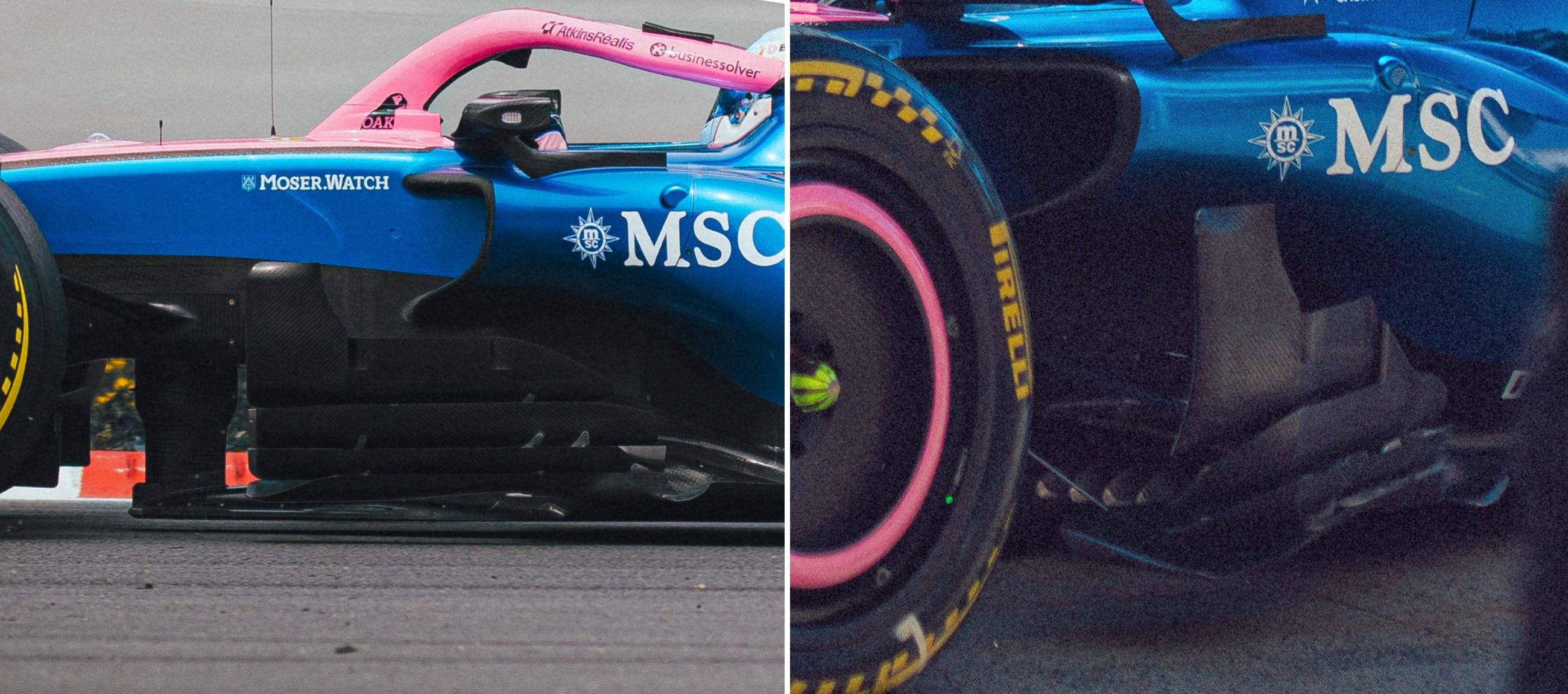
There were also changes at the front of the floor, including the fences on the leading edge but, it’s the deflector array where we can see more of what’s been altered.
Notably the second element in the stack now extends upwards in the rear section, taking some of the resposibility off the uppermost element and whilst it likely provides a similar effect to the similarly placed slot in the previous specification, its potency will be increased.
And, whilst that tail section on the second element is the most obvious change, visually speaking, each of the elements in the deflector array have been tuned to invoke a slightly different response.
Meanwhile, the shape of the floor board and C-shaped floor cutout thereafter have also been modified.
If you’ve made it this far I’m pretty sure you must be enjoying the content I’m providing here on substack, if so please be sure to subscribe in order you get it delivered straight to your inbox.
Also, I’m not associated with a mainstream outlet at the moment, so if you do enjoy the content I provide, please consider a paid subscription to help towards my costs.