

Dissecting the innovative solutions already presented on the Ferrari SF-26, ahead of F1's season opener in Melbourne.
FTM (Exhaust blown flap), inverted active aero and a handful of other innovations that set the Ferrari SF-26 apart

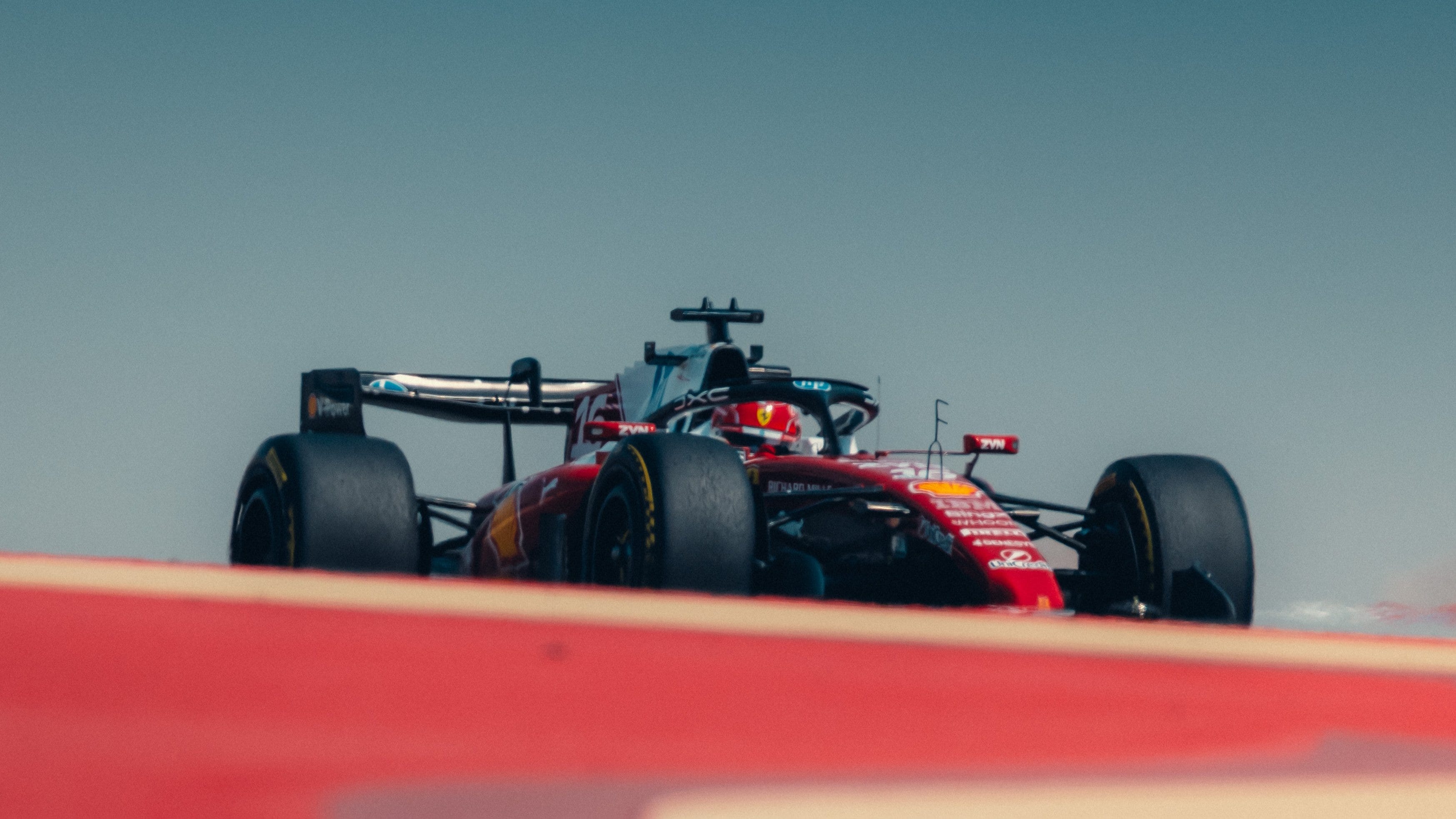
The second pre-season test in Bahrain led to a number of interesting and innovative solutions being revealed by the teams ahead of the first race in Melbourne.
Ferrari stole most of the headlines during the second test though, with two solutions that are sure to have captured their rivals’ attention too, so let’s dive into what the Scuderia have been up to.
I do hope you’re enjoying the content I’m providing here on substack this year, if so please be sure to subscribe in order you get it delivered straight to your inbox.
Paid subscribers will receive some of my content earlier, which helps to keep the lights on and the dream alive…
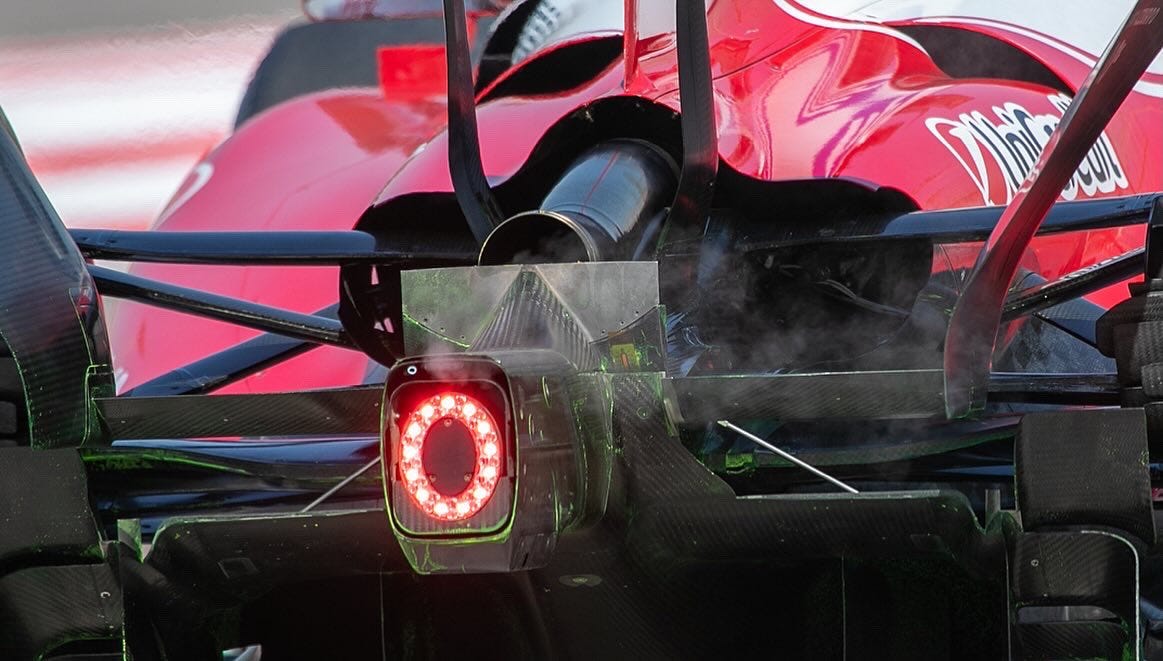
I suspect the more important of the two, given how difficult it will be for their rivals to copy, is the exhaust blown flap arrangement that was fitted to the SF-26 on the first day of the second test.
Apparently, the solution is known internally as their FTM, so I’ll let you apply a relatable acronym to that, given I’m unsure what it could be short for (Flow Turning Mechanism?!? Flick Tail Mode?!?).
Regardless of how it’s named internally, I’ve opted to describe it as a flap, rather than a winglet, as the surface is almost vertical, whereas I’d need to see some angle to ascribe the word wing or winglet to it.
Before we get into its usefulness, perhaps it’s best to understand how they’ve been able to put bodywork here, especially as the FIA have guarded against such actions during the hybrid era.
As we know there’s certain dimensional criteria within the regulations that can lead to a difference emerging in terms of design. The position of the front axle line is one such parameter that can lead to a difference in the length and height of the nose, for example.
In the case of Ferrari’s ‘FTM’, this revolves around the position of the differential, which can be situated anywhere 60mm forward or aft of the rear axle line.
Ferrari have opted to place their differential as far back as possible, around the 60mm rear of the axle line, resulting in their driveshafts being swept as a consequence.
This does however, also result in the relative position of the tail section’s volume (RV-TAIL) being shifted rearward, which allows the necessary room for their FTM to be installed behind the exhaust tailpipe.
Of course, this does mean that whilst there might be a more optimum design for the FTM, in terms of its influence over the plume created by the exhaust gasses, should there be absolutely no limitations, there are some dimensional constraints that they still have to consider.
That’s not to say we’ve seen the FTM’s final form either, as Ferrari are expected to optimize the design now they have official clearance from the FIA to use the solution.
In its current guise the crescent shaped central section of the flap is made from metal in order to help withstand the heat it’s subjected to by the exhaust gasses (note the thermal stickers being used by Ferrari to monitor this).
The outer periphery of the flap, however, remains in carbon fibre, much like the diffuser extension below and the channels that flank the sides of the crash structure ahead of it.
And, make no mistake, the shape of the cone that sits behind the FTM and on top of the crash structure behind it, clearly serves its own purpose in connecting the flow from the diffuser extension with the exhaust plume.
All-in-all, the FTM will drive the exhaust plume upwards, not only entraining the flow from the diffuser but also acting as a means to connect those flow structures with the rear wing above.
Fortunately for Ferrari, the need to retain throttle activity for energy recovery purposes means that the exhaust plume can remain a more stable source of aerodynamic stability too (think back to how off-throttle exhaust blown diffusers were more potent than their forebears).
This also means that they should be able to create more downforce throughout the cornering phase than some of their rivals, for which the size of the exhaust might also play a role, given Ferrari have opted for a tailpipe that’s a little smaller than most of their rivals.
And, of course, we know they’ve worked on turbo size and responsiveness at low throttle due to their rapid starts from the grid box, which should also help to play their part here too.
Zero Xerox
The issue for the rest of the field is that, if this turns out to be as big of a performance differentiator as it might seem, it’s not going to be something they can quickly copy, owing to the aforementioned dimensional criteria.
It would therefore require an all-new rear end arrangement, something which has a long lead time in terms of development and is also costly, especially if we consider the role that would play in staying within the cost cap.
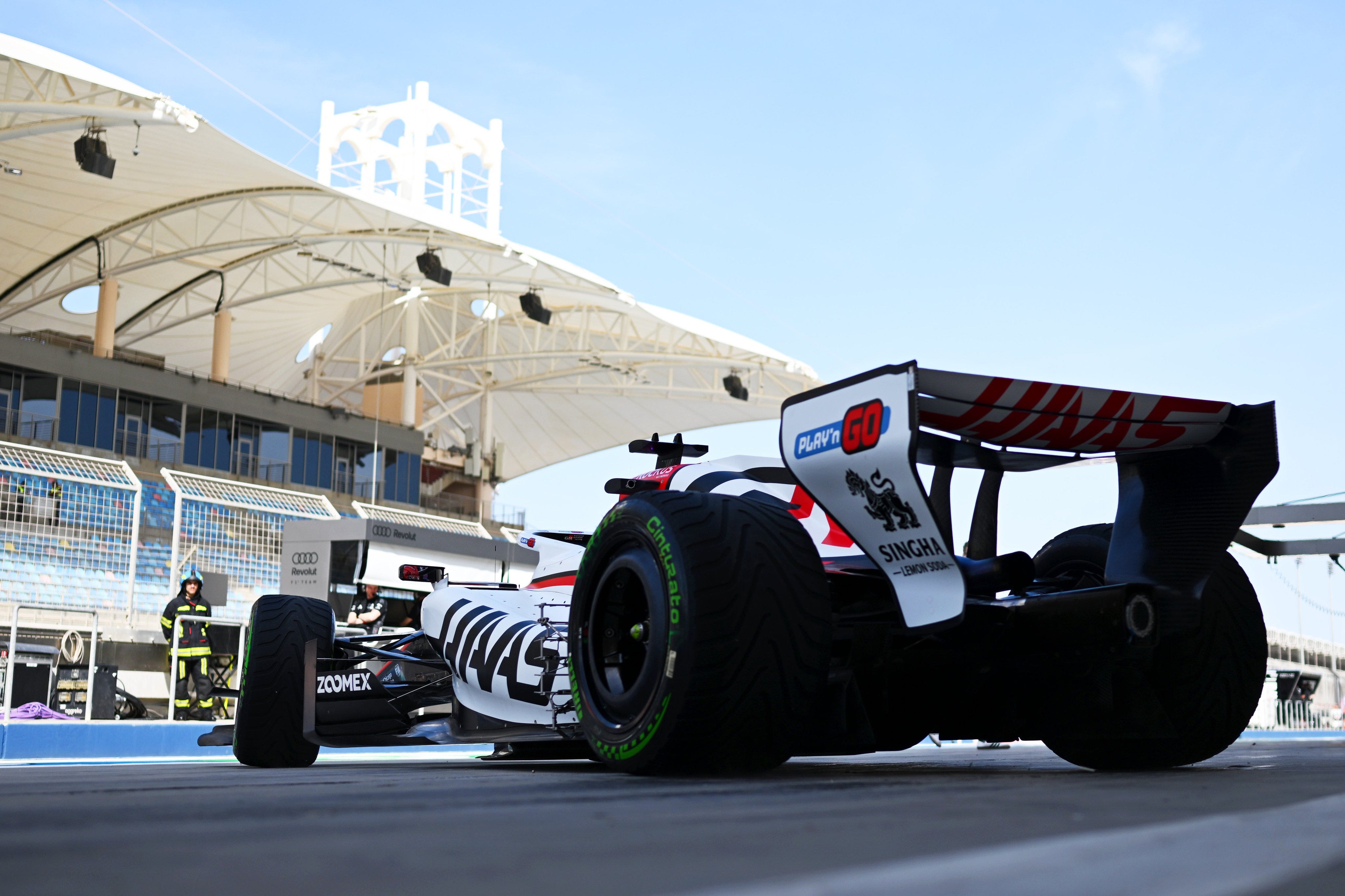
Haas are the only team here that can take a free win, as they take the gearbox, crash structure and rear suspension from Ferrari, meaning they have all the same equipment already in place.
However, that still requires them to rethink the design of their diffuser, etc, which will also take time.
Cadillac, meanwhile, have opted to take the powerunit and gearbox cassette from Ferrari but design and manufacture everything else themselves, meaning they have a shortcut but not the same direct route that Haas can take.
Upside down, the more you turn me.
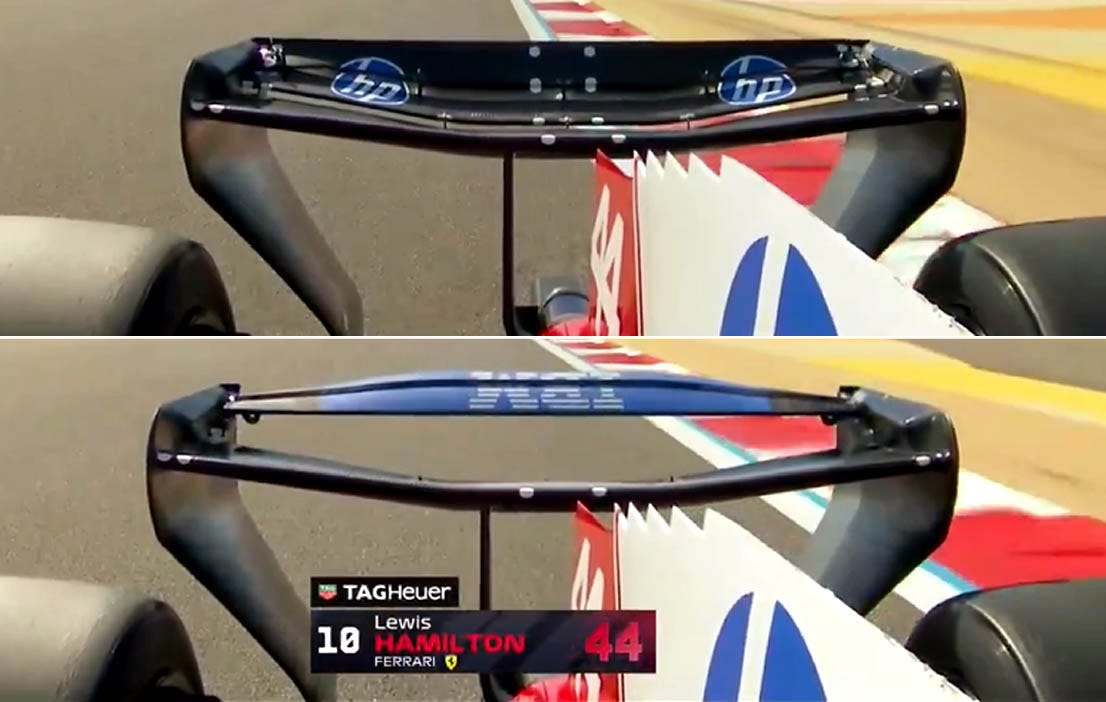
The other solution that appeared, albeit very briefly, on the Ferrari SF-26 during the second day of the test, was their inverted active aero solution.
Alpine and Audi had already opened Pandora’s box on active aero in many respects, with the A526 employing a recliner solution and Audi using a mid-span rocker on the R26, both of which are a departure from the rear pivoting DRS-style arrangement we’ve become accustomed to.
Ferrari literally flipped the script entirely though, as their upper two elements rotate 180 degrees, creating a larger ‘letterbox’ opening than would be exposed if the elements sat on their usual curvature.
And, it’s that feature that’s really interesting with this design solution, as the camber and shape of the two elements are now contradicting their usual role, which will likely result in a further reduction in downforce and drag.
Meanwhile, the rotation of the elements mean that even if momentarily, the flaps are vertical, which may be beneficial in terms of flow attachment and car stability/balance, given Ferrari have spent time on optimising the whole design of the rear wing.
And, it’s perhaps this that’s most interesting about what was likely just a skunksworks project initially, matured into something much more meaningful.
Afterall, we’ve heard from various sources that this solution was looked at by other teams but quickly disregarded due to some of the downsides that it might contain, such as additional weight, for example.
However, with more than a cursory glance, some solutions, over time, do yield a better result than they might first appear to. This, I have a feeling, is one of those, as you have to amplify certain design aspects to get the best from it.
And, given the maturity of the design shown by Ferrari, it’s clear they reached a crossover point whereby it clearly merited the use of more resources.
I’ve already gone through that in more detail in my journal from the second day of the test, which includes a complete redesign of the flaps, not only in terms of their chord and shape differences but also in how they had to be modified around the tip section to accept the revised endplate design.
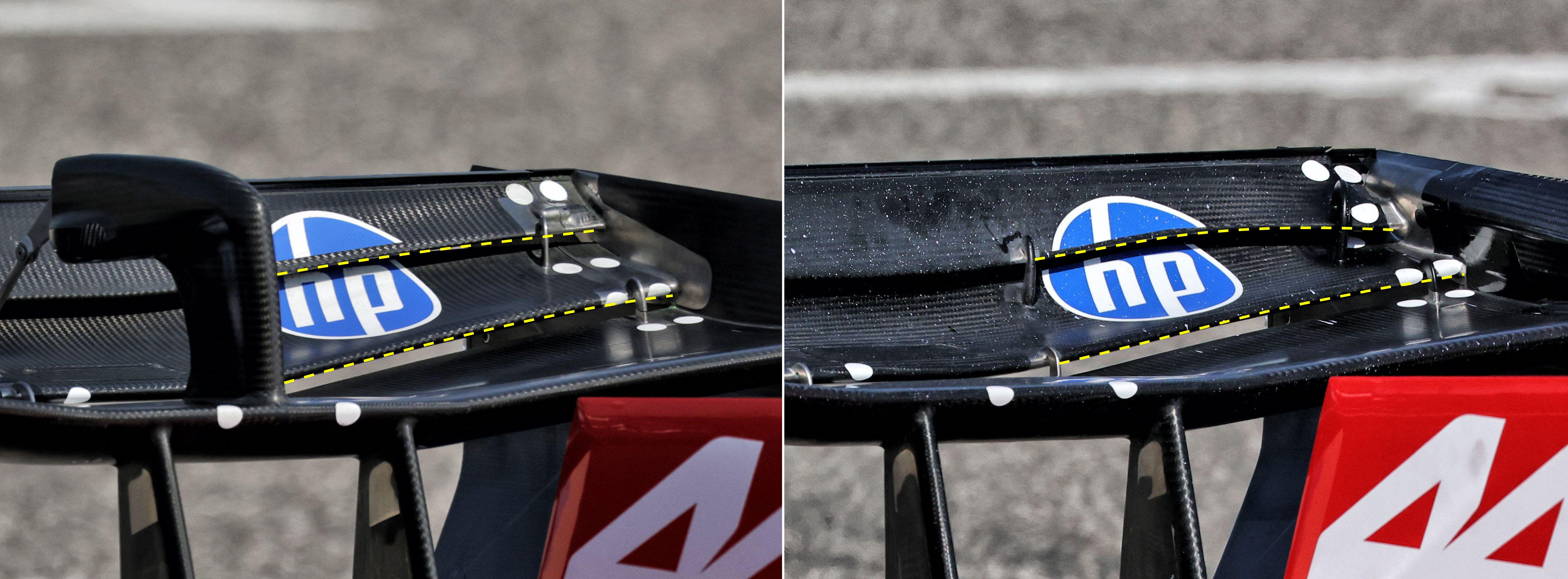
It’s here where they’ve had to get the most creative, perhaps, as they’ve had to incorporate the moving mechanism within the endplate, whilst also being mindful of the aerodynamic consequences that might have in what’s a delicate area too.
There’s also the weight issue that’s been brought up by others too, with the DRS-style central pod a known quantity for the teams in that respect, whereas what Ferrari have gone for needed to be balanced against that.
Not a two trick pony
The design maturity of the SF-26, along with the aforementioned standout solutions, is impressive from Ferrari and shows how they intend to go about their business this season.
However, we have seen false dawns from them in the past, with the team seemingly very good at identifying performance enhancing solutions at the beginning of a regulatory cycle, only for them to be usurped by their rivals during the development race.
It’ll therefore be interesting to see how they delineate from their own development path in order to chase innovative solutions seen elsewhere up and down the grid and who chooses to branch their own development path towards Ferrari’s.
Nonetheless, aside from the headline items already discussed, there are a number of nice touches elsewhere on the SF-26…
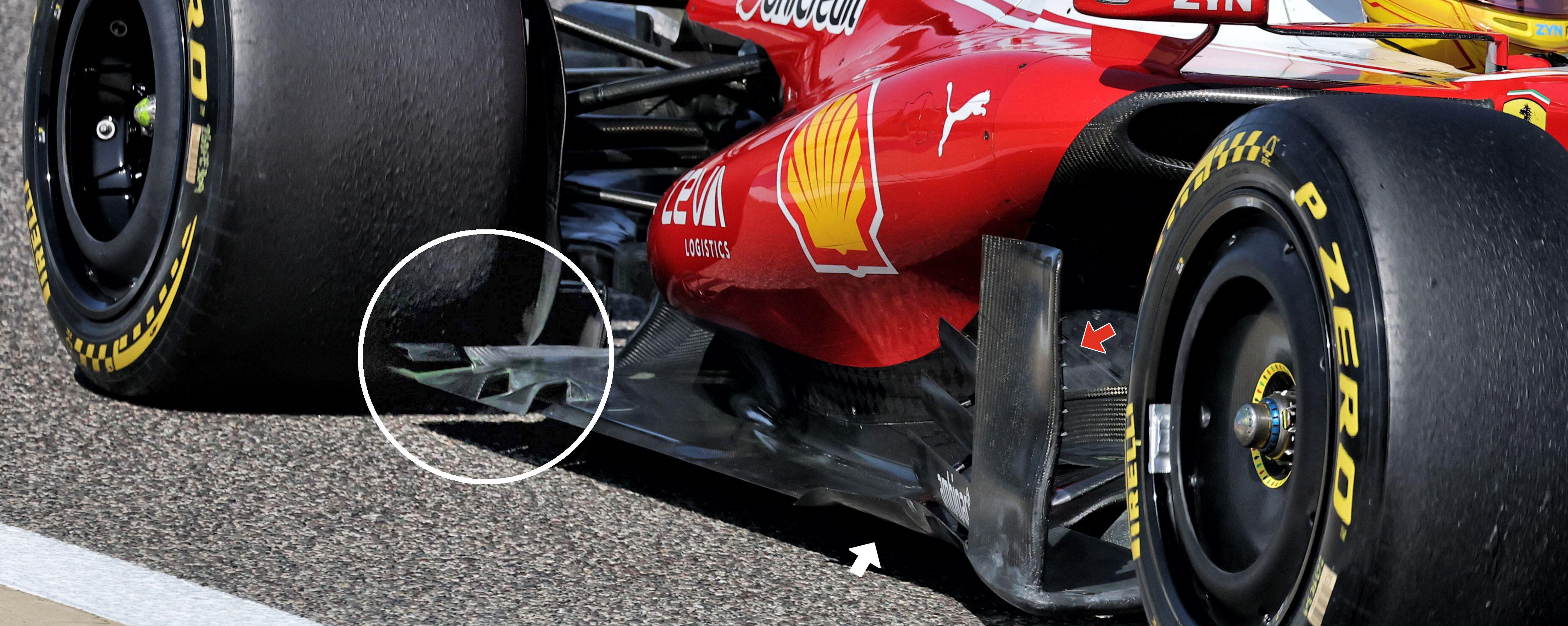
The deflector array was modified for the second test, with some mini-vortex generators added to the leading edge of the skyscraper element (red arrow), which shows how much work the team have already done when probing the regulations.
Meanwhile, the floor foot and floor edge have been designed with a scroll section that will harmonise with the deflector array’s slats above (white arrow), whilst the floor edge thereafter has a similar cutout to the ones forced upon the teams for the remixed regulations in 2021.
This cutout leads rearwards toward another area of the regulations that have been opened up for 2026 and where Ferrari have already begun making changes.
The tyre spat region (circled and brightened) now has two raised slots and some swept edge and trailing edge geometry.
There’s also a dog-eared winglet mounted above the rear deck region, all of which are attempting to alter the airflow’s behaviour before it collides with the rear tyre and the ensuing tyre squirt that’s discarded into the diffuser’s path.
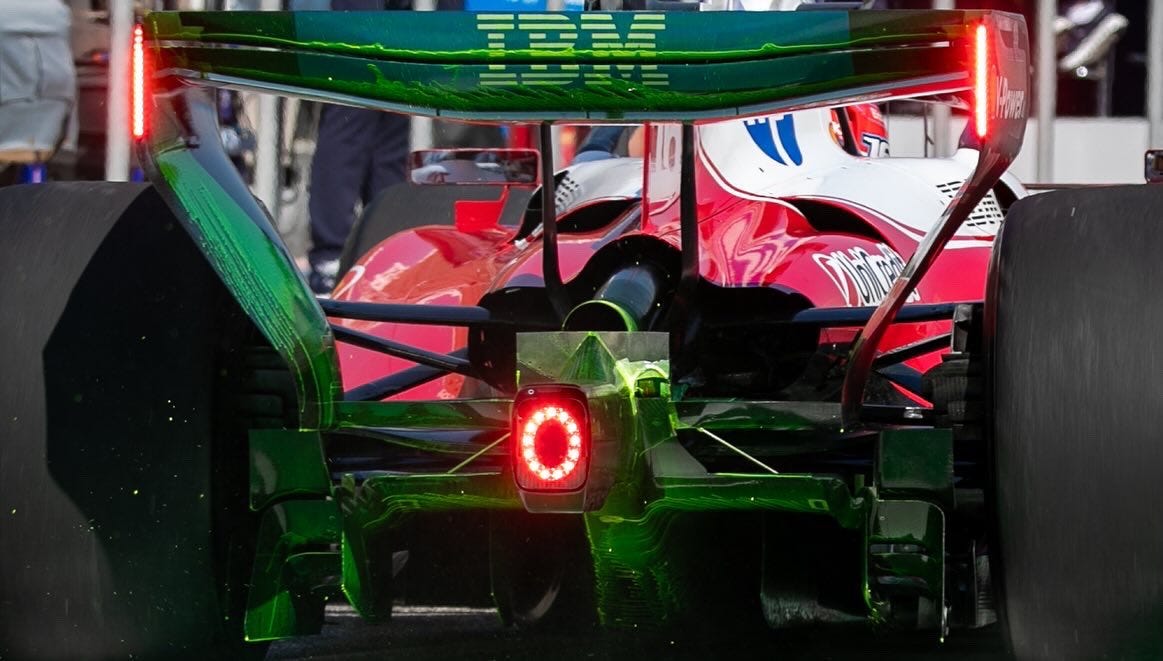
The diffuser is also already a pretty mature design from Ferrari, as they’ve incorporated the floor winglets mounted on the sidewall into the concept, using the larger mouse hole ahead of it and essentially turned the sidewall of the diffuser into an additional set of strakes.
There are another set of strakes inboard of these too, whilst you can see how they’ve cut out the upper rear corner of the diffuser too.
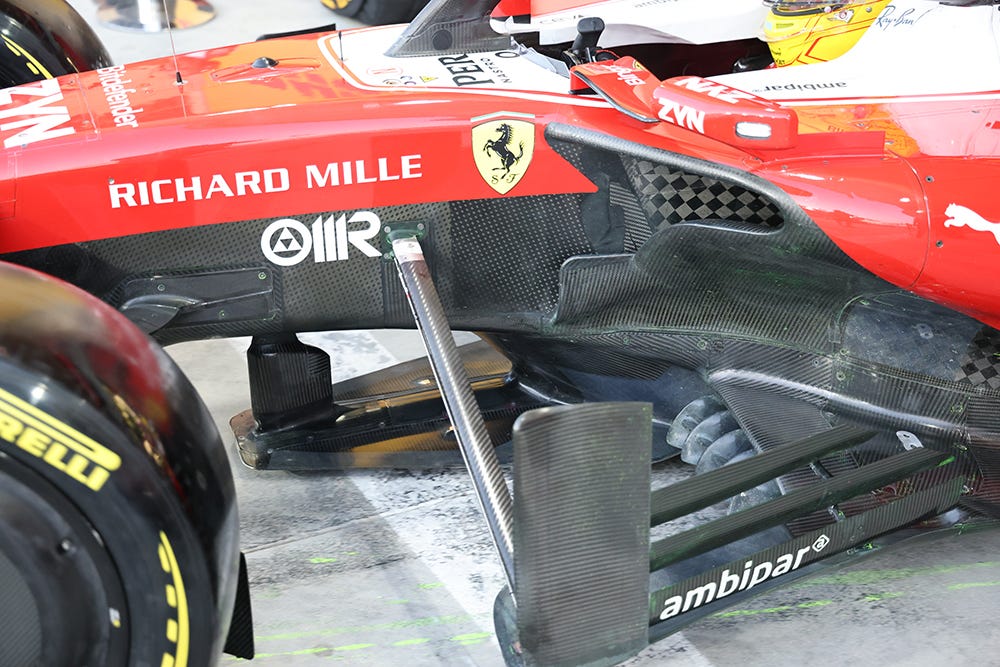
Heading back up the car it’s interesting to return to the sidepod inlet design, as the early renders and images of the car suggested that the inlet terminated a little higher than now know to be accurate.
Previously it had been assumed that the forward section that helps to form the P-shaped design was just a vane that stuck up out of the floor but here we can see that’s not true.
At this stage it also appears that Ferrari haven’t spent a considerable time on trying to leverage the design freedom that others have with the bib, as they have relatively flat, traingular surface at present.
Meanwhile, others have taken to carving out sections of the surfaces edge and adding slots too. However, they led the charge on that design front in the past, so if there’s some performance to be added, I suspect we’ll see changes from them early in the season.
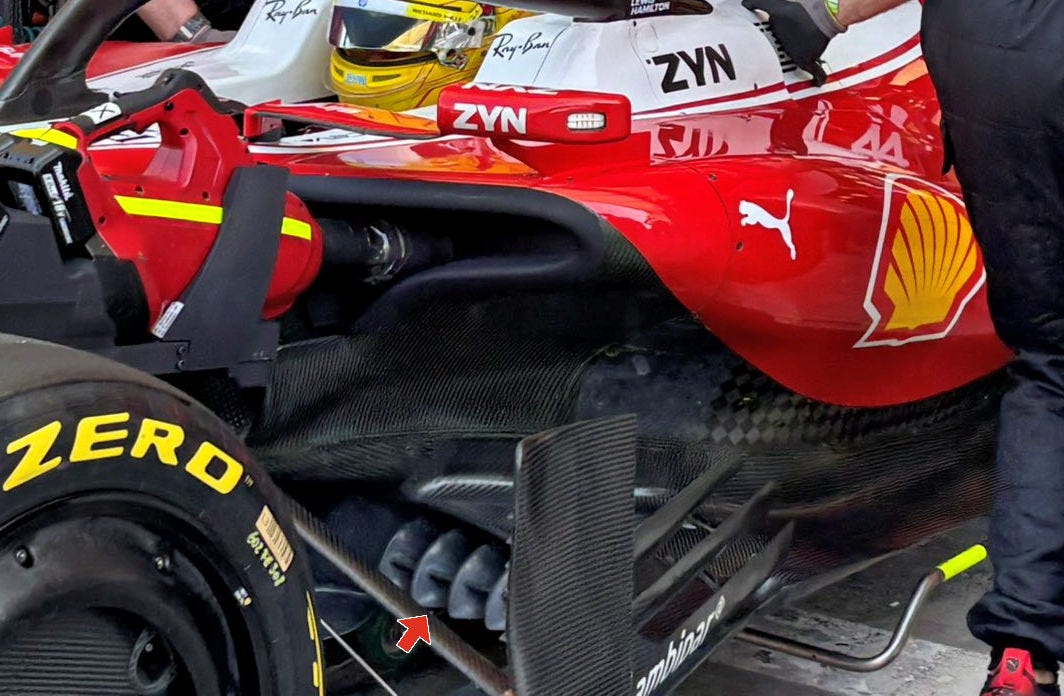
Last and by no means least (there’s still more I could cover too to be fair) are the horizontal blades thats have been fixed between the floor strakes/fences on the leading edge of the SF-26’s floor.
In case you haven’t seen it yet I’ve also put out a technical image gallery on Planet F1 looking at some of the best solutions seen at the second pre-season test.