

Wings on wings
F1 is art, don't @ me 😉

The Ferrari SF-26 has proven to be one of the more interesting cars to emerge from the regulatory reshuffle this season, not only because they did their homework when it came to the issues that would be faced at race starts and modified their powerunit design accordingly.
But, also because they’ve been quite aggressive when it comes to designing their chassis and aerodynamics to take advantage of the nuances within the regulations.
I do hope you’re enjoying the content I’m providing here on substack this year, if so please be sure to subscribe in order you get it delivered straight to your inbox.
Paid subscribers will receive some of my content earlier, which helps to keep the lights on and the dream alive…
Perhaps the most obvious design solution on the SF-26 that fits that bill is the ‘Macarena’ wing but, given they’re yet to race it, it’s probably prudent to look at some of the components and design solutions that have been raced.
One such solution is baked into the design of the SF-26 and therefore very difficult for their rivals to copy this season, with the exhaust blown flap, known as an FMT by the team, reliant on the position of the differential.
The only other team using Ferrari equipment that could take advantage of this is Haas, which is exactly what they did with an update in China.
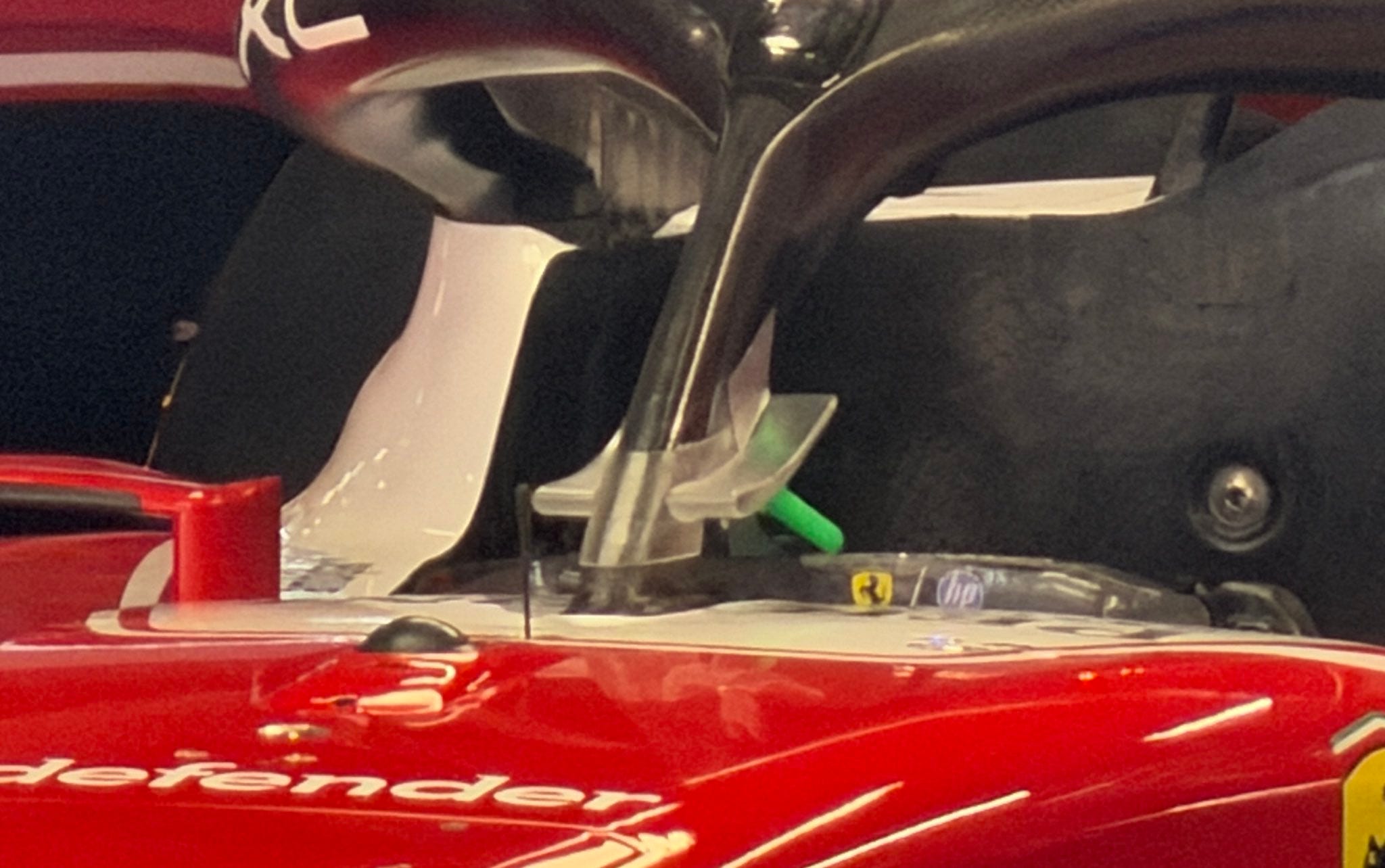
Meanwhile, Ferrari added another solution to the SF-26 that caught the attention of their rivals and resulted in the Scuderia removing it from the car after the Sprint.
Winglets mounted either side of the halo’s central support pillar were installed as a means to help reroute airflow over the drivers helmet and improve efficiency.
However, it’s understood, quite understandably I’d say, that the FIA met with Ferrari after the Sprint to discuss the winglets, following questions that had been raised by their rivals about their legality.
Ferrari had clearly had the design passed ahead of their use and they’d passed scrutineering at the start of the event, so technically they would be considered legal.
However, if a team were to protest them during the event it could alter the result, for which Ferrari felt it wasn’t worth the risk, given the points that they’d potentially lose.
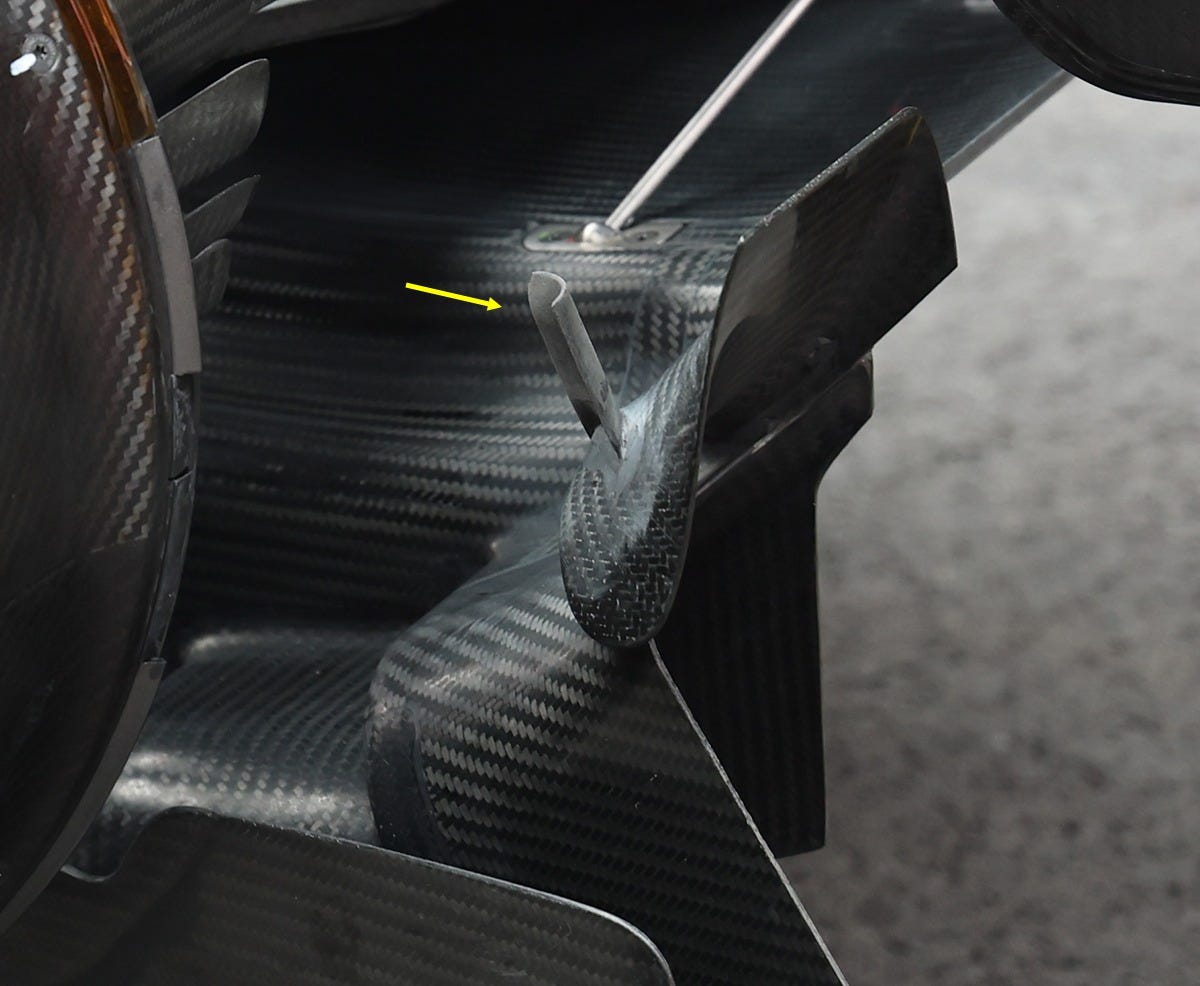
Another example of Ferrari thinking outside the regulation box is the new winglet that’s mounted on top of the upper floor winglet element (yellow arrow).
Angled across the element it sits upon there’s clearly some work being done here to alter the airflow’s course, especially given the acute angle of the new element.
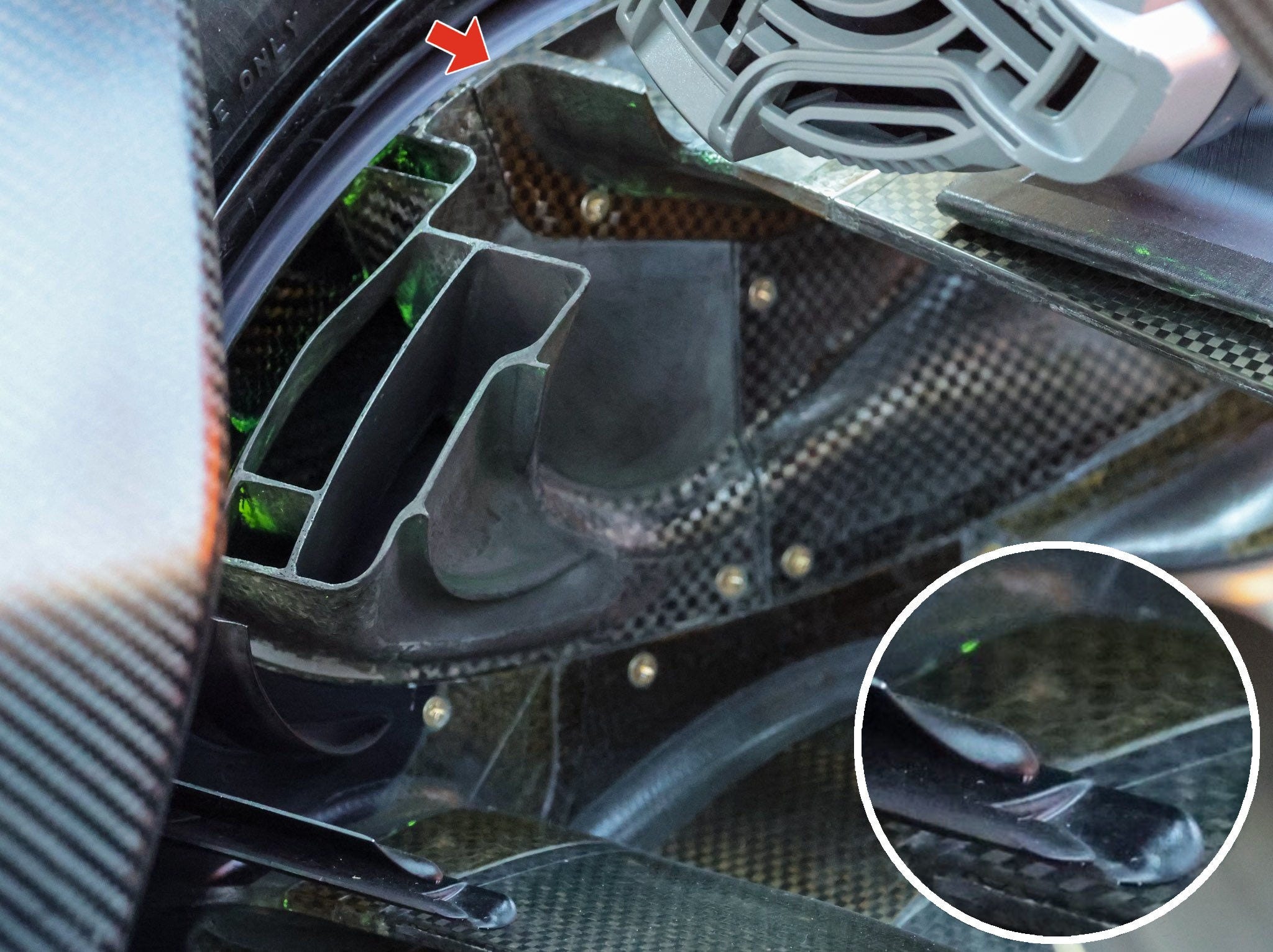
Another fascinating image here from Xavi looking at the MCL40’s rear brake outlet and the level of design detail that McLaren have gone into already this early into a regulation set.
In fact, the more you look at this image the more you can find that pleases the eye, albeit the most obvious of those features is the two flicks on the outlet’s outer surface that not only help to direct flow but also draw the heat out from the outlet.
Ahead of this we can see how the suspension element has been cranked to form a winglet (red arrow).
Meanwhile, behind the outlet we get a glimpse of some of the lower winglets, the tip of the lowermost one that’s visible is split into two, the bottom section of which is inversely profiled.


Moving away from Ferrari, Luis spotted that Verstappen and Hadjar took to using a different front wing load level in China, with the Dutchman seemingly searching for a little more front end.
Give Luis a follow on Twitter / X if you haven’t already btw, you won’t regret it.